MYOWAVE EHG Diagnostic Platform
Non-Invasive Electrohysterography Hardware, 250 Hz DSP & Clinical Portals
Won the Year 2 Molecular Bioengineering Prize for Best Design Group Project. Owned all electronic hardware (KiCad ADS1299 PCB, Arduino Due DAC generator) and software (250 Hz SciPy Butterworth/Welch DSP engine, NiceGUI + Firebase clinical and patient portals) for the ENDO1000 endometriosis study.
Departmental Award
1st Place Prize
Year 2 Molecular Bioengineering Prize for Best Design Group Project
Analogue Front-End
24-Bit ADS1299
8-channel simultaneous delta-sigma ADC at 24x PGA gain (22.3 nV LSB)
Real-Time DSP Rate
250 Hz Pipeline
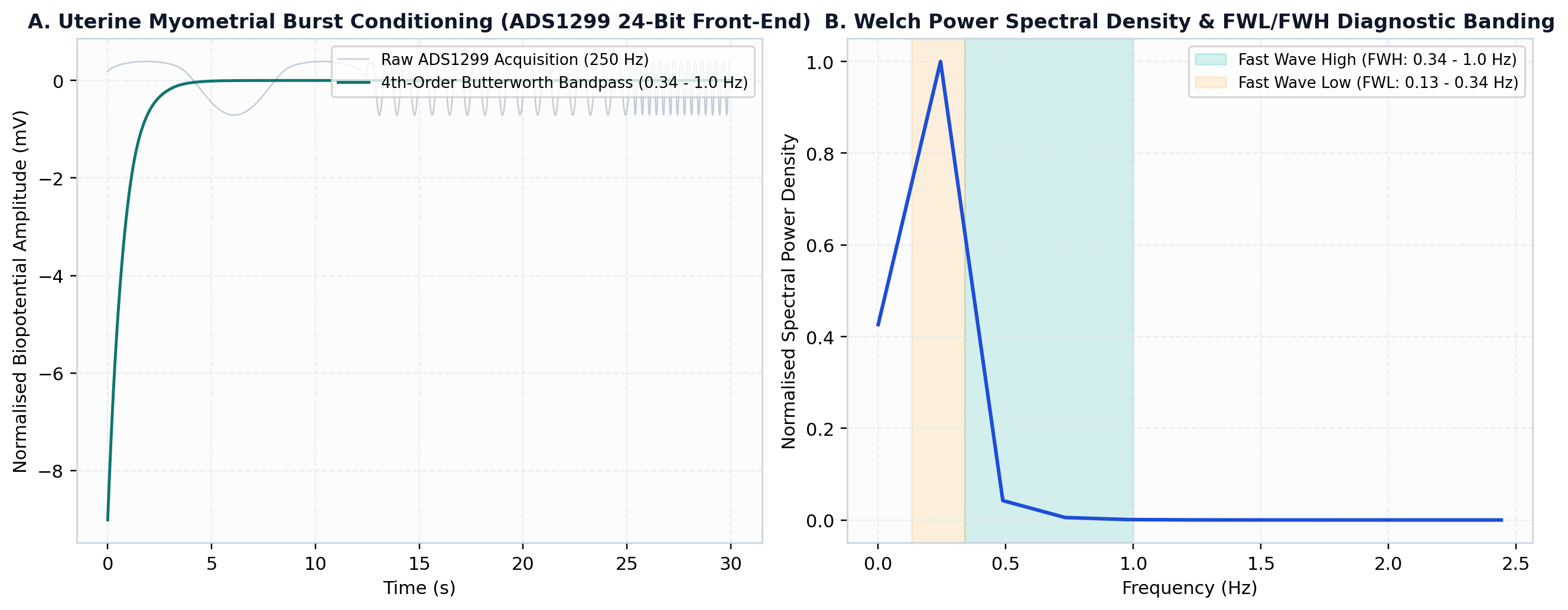
4th-order zero-phase Butterworth (0.34 - 1.0 Hz) & Welch FWL/FWH PSD
Clinical Architecture
Dual NiceGUI Apps
Clinician dashboard (:8081) & patient diary (:8082) + Firebase/SQLite
System Architecture & Quantitative Results
- KiCad Biopotential Hardware (
MYOWAVE.kicad_sch): Integrated a Texas InstrumentsADS1299-6PAGR24-bit biopotential ADC with Driven-Right-Leg (DRL) common-mode cancellation and Arduino Uno/Due SPI shield headers; verified passband flatness and 50 Hz CMRR in Python (T3_CMRR.py). - Synthetic Physiological Uterus DAC (
EHG_Generator.ino): Programmed an Arduino Due 12-bit hardware DAC () synthesising slow-wave envelopes modulated by FWL () and FWH () action-potential bursts. - Threaded 250 Hz DSP Engine (
background_service.py,dsp_math.py): Zero-phase Butterworth bandpass conditioning (scipy.signal.filtfilt), sliding RMS burst detection, and Welch PSD feature extraction. - Dual NiceGUI + Firebase Portals: Built an authenticated clinician dashboard (
port 8081) and mobile participant symptom diary (port 8082) with interactive Plotly charts, dual Firebase Firestore sync, and local SQLite persistence.
KiCad 3D PCB Renders, Copper Layouts & 250 Hz DSP Output
[Fig. 1]250 Hz Butterworth Bandpass Recovery & Welch FWL/FWH Spectral Density
Left: Zero-phase 4th-order Butterworth bandpass filtering (0.34 to 1.0 Hz) isolating uterine myometrial bursts from 50 Hz mains noise and respiration drift. Right: Welch Power Spectral Density across Fast Wave Low (0.13 - 0.34 Hz) and Fast Wave High (0.34 - 1.0 Hz) diagnostic bands.
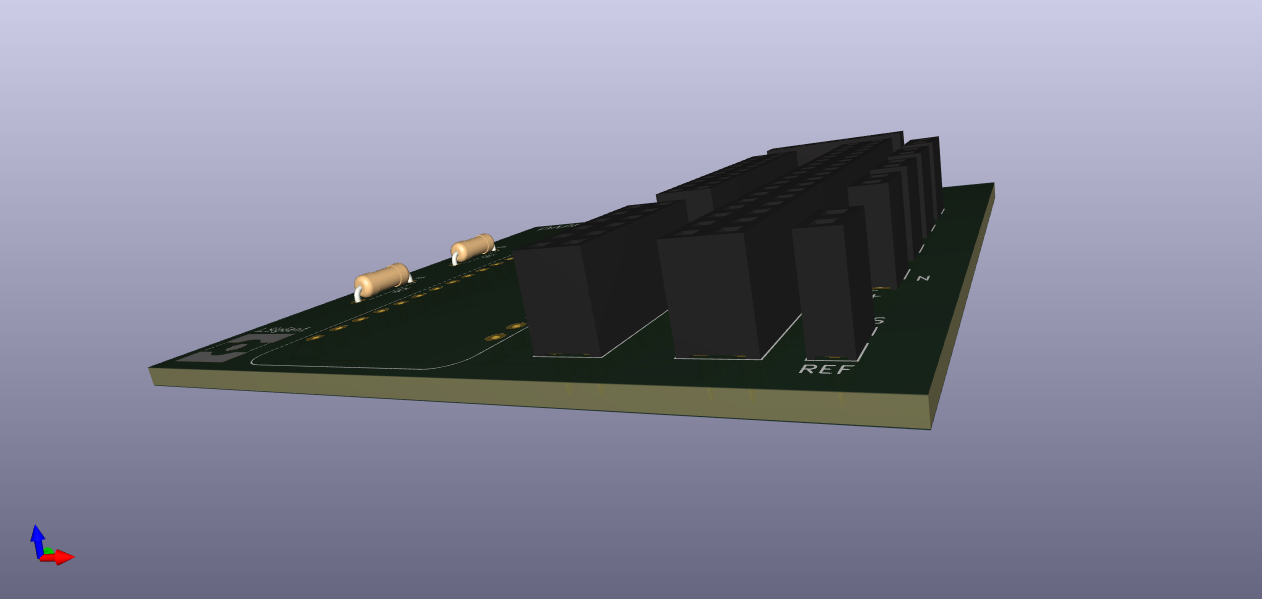
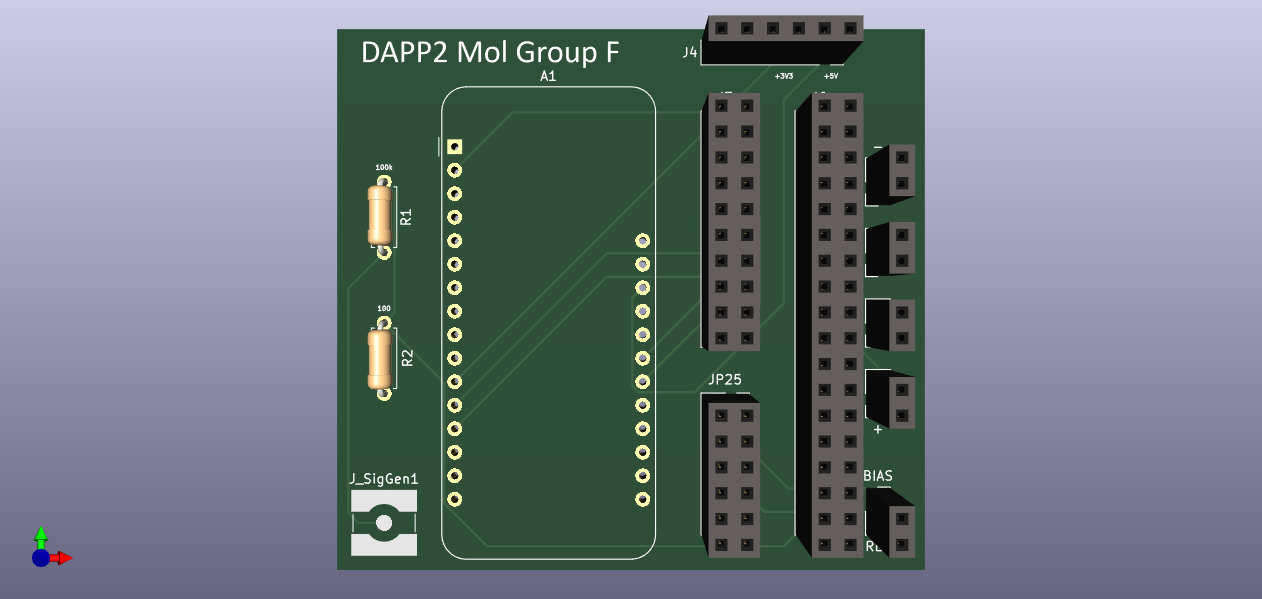
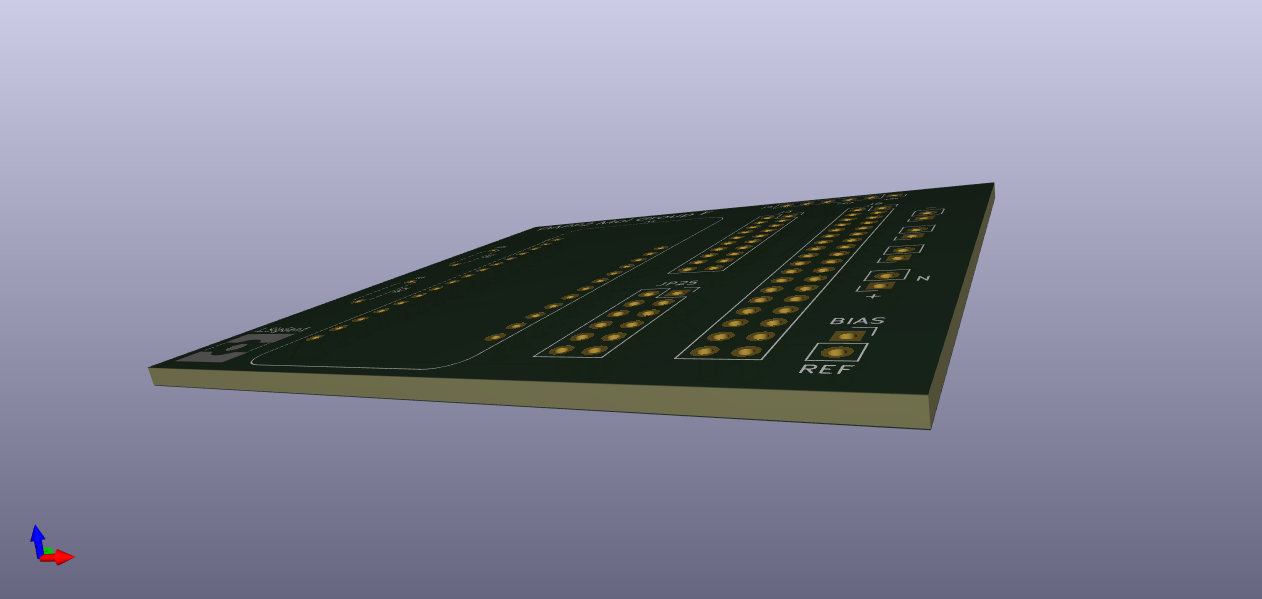
[Fig. 2]3D KiCad Renders of the Custom ADS1299-6PAGR Biopotential Acquisition Shield
Isometric and top 3D board renders showing the 64-pin TQFP ADS1299-6PAGR front-end, differential Ag/AgCl electrode headers, passive RC input filters, and isolated +2.5V/+3.3V/+5V supply regulation.
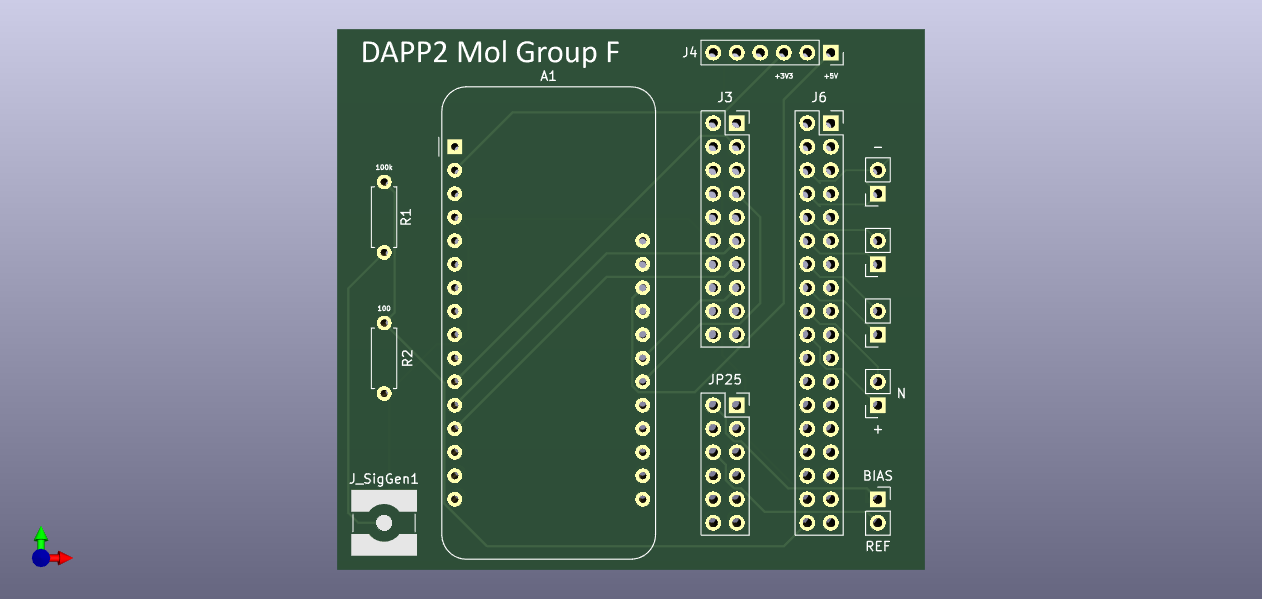
[Fig. 3]KiCad Copper Routing & Differential Signal Isolation
PCB copper layout separating microvolt differential analog input networks from high-speed SPI digital clock lines.
Want the Full Development Story?